Artificial Disc Replacement Surgery in Paramus, Wayne & Parsippany, NJ
The Spine Center
at Modern Orthopedics of New Jersey
Paramus
72 Route 17 North
Paramus, NJ 07652
Wayne
2025 Hamburg Turnpike
STE C, Wayne, NJ 07470
Parsippany
3799 US-46
#207, Parsippany, NJ 07054
Nerve compression resulting from disc damage or degeneration can significantly affect mobility, comfort, and quality of life. For appropriately selected patients, artificial disc replacement surgery can relieve pain and chronic symptoms while also preserving the natural flexibility and motion of the spine.
If you live with disc-related nerve symptoms and are seeking to improve your mobility and spinal function over the long term, artificial disc replacement surgery could offer an effective path forward. To learn more about our cutting-edge spine solutions and personalized approach to patient care, schedule a consultation with the Modern Orthopaedics of New Jersey spine team today.
What Is Artificial Disc Replacement Surgery?
Artificial disc replacement (ADR) is a surgical procedure that removes a damaged or degenerated intervertebral disc and replaces it with a specialized prosthesis that mimics the structure and function of a healthy disc. Unlike spinal fusion surgery, which improves stability but limits motion by permanently joining two or more vertebrae together, ADR preserves some of the natural flexibility of the spine, allowing for spinal movement while relieving nerve compression.
ADR can be performed in the neck (cervical disc replacement surgery) and less commonly, in the lower back (lumbar disc replacement surgery) depending on the location of disc damage.
Conditions Treated Via Disc Replacement
In appropriately selected patients, artificial disc replacement can be an effective treatment option for a variety of spine conditions linked to reduced mobility, chronic pain, and nerve compression. Common conditions treated via disc replacement surgery include:
Degenerative Disc Disease
Degenerative disc disease (DDD) is a condition characterized by the gradual breakdown of intervertebral discs, leading to stiffness, loss of mobility, and nerve compression over time. ADR restores disc height, reduces nerve pressure, and maintains motion, offering long-term relief for patients whose symptoms haven’t improved with conservative treatment.
Herniated Discs
Disc herniation occurs when the soft interior of an intervertebral disc (nucleus pulposus) becomes significantly displaced or even pushes through the disc’s rubbery outer layer (annulus fibrosis). ADR removes the damaged disc and replaces it with a prosthesis, relieving pain, nerve compression, and related symptoms.
Radiculopathy
Radiculopathy describes pain, numbness, tingling, or weakness caused by the irritation or compression of a nerve where it exits the spine (the nerve root). ADR can effectively alleviate pressure on nerve roots, leading to symptom relief and improved long-term function.
Bone Spurs
Bone spurs (osteophytes) can develop as a result of chronic degeneration, narrowing the spaces where nerves exit the spine and leading to pain or other neurologic symptoms. By restoring disc height and removing bone spurs, the pressure on the nerve root can be relieved.
Spinal Stenosis
Spinal stenosis is a narrowing of the spinal canal that can lead to compression of the spinal cord or nearby nerve roots. In some cases, ADR surgery can restore natural spacing and alignment to the spine, relieving nerve root and spinal cord pressure and leading to improved comfort and mobility.
What To Expect From Surgery
Undergoing artificial disc replacement surgery is a major life decision, and knowing what to expect is essential. If the decision is made to move forward with ADR, Dr. Pyun will work closely with you to answer all of your questions and ensure you’re thoroughly educated and prepared leading up to surgery day.
Diagnosis and consultation for ADR take place at our Paramus, Wayne, or Parsippany clinic, but the surgery itself is performed at one of our affiliated hospitals or surgical centers. An overview of the procedure is outlined below:
- Artificial disc replacement surgery is performed under general anesthesia and typically takes between 2 and 3 hours to complete, though the length of surgery may vary based on the specifics of the case.
- The patient is positioned on their back, and a small incision is made in the front of the body – either in the neck or abdomen – to safely access the damaged disc while minimizing disruption to surrounding spinal structures.
- Nearby tissues and structures are carefully moved aside to create a clear path to the affected portion of the spine.
- The damaged disc is then completely removed, and the surrounding vertebrae are gently spread apart to restore the proper spacing between them.
- The artificial disc implant is inserted into the disc space and precisely positioned between the vertebrae using advanced imaging technology to ensure proper alignment and stability.
- The incision site is closed, and the patient is brought out of anesthesia.
Disc Replacement Benefits
ADR offers numerous potential benefits for appropriately selected patients living with disc-related pain and nerve compression. These include:
- Preserved spinal mobility and improved range of motion
- Restoration of natural disc height
- Reduced stress on nearby discs and spinal structures
- Effective nerve decompression and pain relief
- Improved flexibility and long-term comfort
Advancements are constantly emerging in prosthetic disc design, development, and placement, leading to ongoing improvements in patient outcomes.
How To Prepare
Preparing for artificial disc replacement surgery begins with a thorough consultation and diagnostic process at one of our clinics. Dr. Pyun will review your medical history, order imaging tests (if necessary), and carefully assess your symptoms and overall health to determine whether ADR is an appropriate next step.
In the weeks leading up to ADR surgery, patients may be asked to:
- Complete preoperative testing and lab work
- Adjust medications
- Follow specific instructions regarding eating, drinking, and smoking
- Arrange for transportation and reliable at-home care post-surgery
Recovery
The recovery period following ADR surgery can vary based on the location of the procedure, the age and overall health of the patient, and any complicating factors. In general, the following can be expected:
- Most patients are able to go home on the same day as their surgical treatment. In some cases, an overnight hospital stay may be recommended.
- Patients typically begin walking and gentle activity soon after surgery, guided by a physical therapist.
- Most patients can resume normal daily tasks within a few weeks, though returning to more physically demanding activities may take several months.
- Attending regular follow-up appointments to monitor healing is critical to ensuring optimal long-term outcomes.
Potential Complications
Artificial disc replacement is widely considered a safe and effective procedure. However, like any surgical procedure, it carries potential risks. These may include:
- Bleeding
- Infection
- Nerve irritation or injury
- Implant-related complications
- Unresolved pain or symptoms
Speak directly with Dr. Pyun to learn more about any specific risks or complications related to your individual case.
About Dr. Joseph Pyun
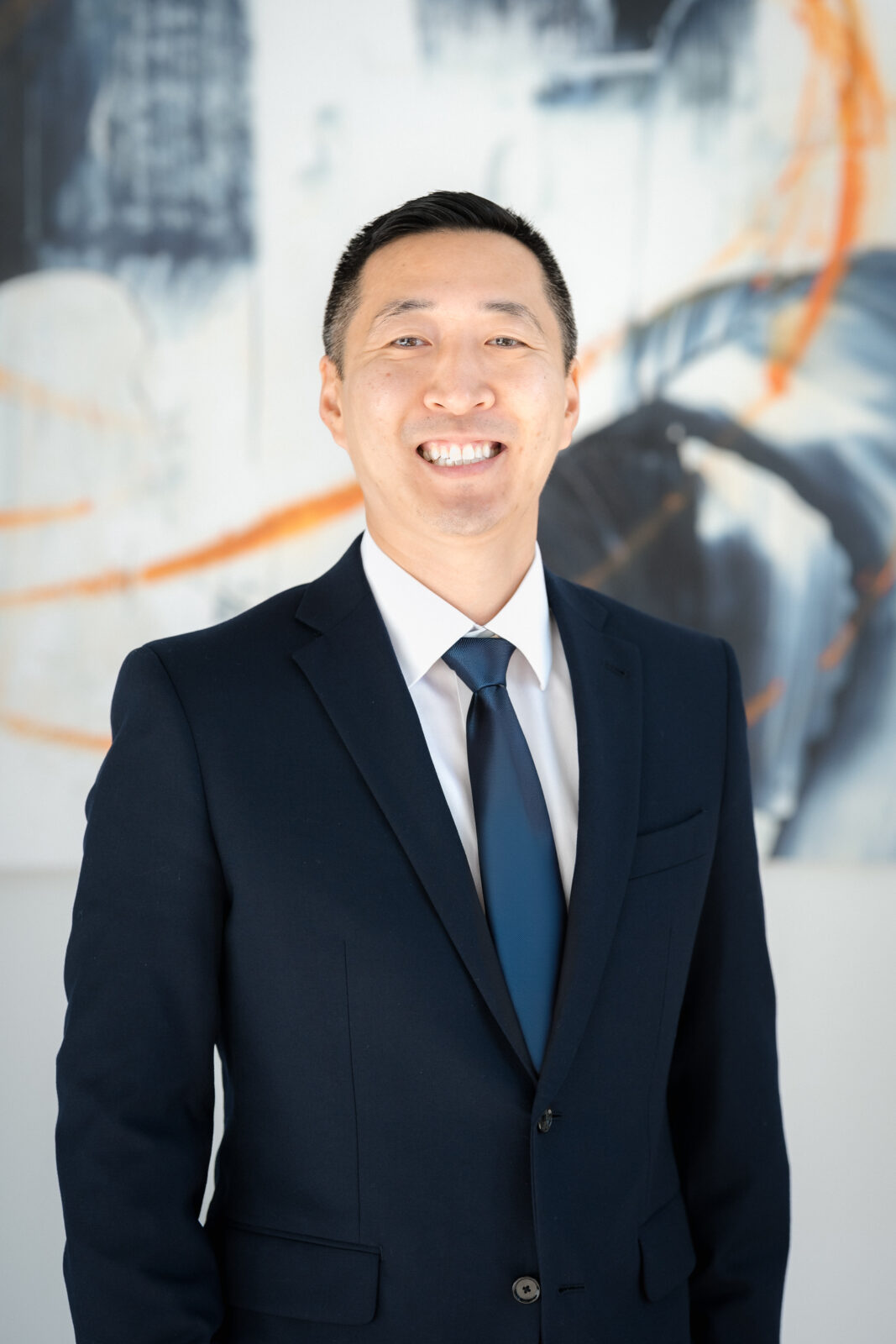
Dr. Joseph Pyun is a board-certified, fellowship-trained orthopedic spine surgeon specializing in minimally invasive and motion-preserving spine surgery. He has extensive experience performing artificial disc replacement procedures to treat conditions ranging from degenerative disc disease to herniated discs, nerve compression, and more.
Dr. Pyun’s philosophy is rooted in patient education, collaboration, and shared decision-making. His dedication to advanced surgical techniques and compassionate care makes him one of New Jersey’s most trusted orthopedic spine surgeons.
Why Choose Modern Orthopaedics Of New Jersey?
When you choose Modern Orthopaedics of New Jersey, you choose:
- Expert spine care provided by Dr. Pyun and our leading spine team
- Advanced, minimally invasive treatment options in a state-of-the-art environment
- Personalized treatment options tailored to your needs and long-term goals
- A patient-first approach that positions you as an active partner throughout your treatment and recovery journey
Book An Appointment
Take your first step toward pain-free living and natural movement with an artificial disc replacement procedure at Modern Orthopaedics of New Jersey. Contact our Paramus, Wayne, or Parsippany clinic to schedule a consultation with Dr. Joseph Pyun!

A Different Orthopedic Experience.
We combine cutting-edge technology with personalized care to deliver exceptional orthopedic treatment. Our team of experts focuses on your unique needs to ensure optimal outcomes and a superior healing experience.
Our Approach to Care
Comprehensive solutions for your orthopedic needs
Treatment Diversity
We offer a comprehensive range of treatments, ensuring personalized, targeted plans for every patient.
Technological Excellence
We utilize cutting-edge technology for precise diagnosis and innovative treatment options.
Collaborative Care
Our multi-disciplinary approach involves various specialties to provide comprehensive care and recovery.
Skilled Experts
Our team is composed of highly skilled, experienced orthopedic professionals, providing expert care.
Patient Focus
We prioritize patient comfort and satisfaction, creating a supportive environment for optimal healing.
Post-Treatment Support
Our robust post-treatment support ensures ongoing patient care through recovery and rehabilitation services.