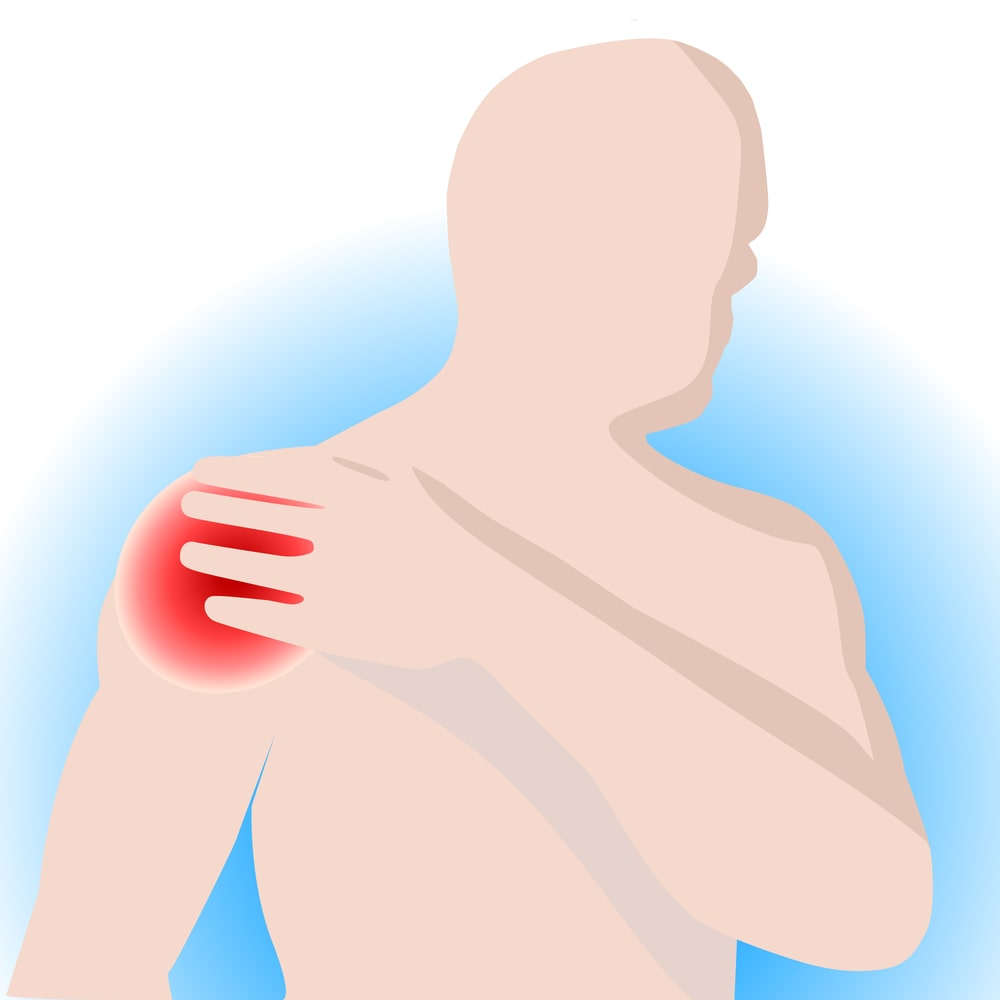
You’re lifting the canoe onto your car’s roof rack when you feel it again—that pain and weakness through your shoulder and down your arm. Rubbing your shoulder joint, you wonder what on earth is going on and how you’re going to address it.
If you’re experiencing unexplained pain in your shoulder, neck, arms, or upper back, shoulder bone spurs could be one of the possible culprits. While relatively common, these bony protrusions can significantly impact your daily routine and quality of life.
Fortunately, shoulder bone spurs are treatable in a variety of different ways, depending on their severity and your lifestyle goals. Below, we’ll explore what they are, how they’re diagnosed, and provide an overview of common treatment options.
If you suspect that you may have shoulder bone spurs, making an appointment with your orthopedic surgeon as soon as possible will help you determine the best course of action.
What Are Shoulder Bone Spurs?
Bone spurs (known medically as osteophytes) are bony projections that develop along the edges of bones. Often, they’re small, smooth, and go unnoticed in the body without causing any symptoms. But when bone spurs press or rub against other bones or soft tissues (including ligaments, tendons, and nerves), the results can be painful and seriously impede your day-to-day routine.
Why do bone spurs form? Most often, they develop in response to injury or inflammation in order to protect a joint or area of the body that has been damaged. Unfortunately, they sometimes also cause more damage in the process.
While bone spurs can form in many different parts of the body, including the hips, knees, and spine, the shoulder is one of the most common areas where they often become problematic. When bone spurs form under the acromion (the tip of the outer edge of your shoulder blade or scapula), they can cause significant discomfort and require proactive treatment.
Video Transcript
Introduction
hi I’m Peter deny board certified orthopedic surgeon upper extremity specialist founder of modern Orthopedics of New Jersey and I’m here to talk today about bone spurs of the shoulder bone spurs in the shoulder what you need to know.
Some people when they have shoulder pain go and get an x-ray or maybe even an MRI. When they get the report back a lot of times it’ll say something about a bone spur.
What a Bone Spur Can Mean
now the bone spur in the shoulder or really any joint could mean a one of a number of things. Sometimes it means you have arthritis where there’s a buildup of extra bone on the periphery of the joint and you’ll see a little extra spur and that could be one of the causes of bone spurs. Now that’s more along the lines of arthritis.
Other times you can have bone spurs coming off of the acromion. Now the acromion is the roof of the shoulder so you can imagine there’s a ball in socket here and then there’s a roof above the shoulder. The rotator cuff goes underneath the roof and you can have sometimes what we would consider bone spurs kind of like little prominences pushing downward and potentially rubbing on the rotator cuff.
So that’s sometimes cause of rotator cuff either irritation partial or full thickness tears. Other times it’s sort of incidental to a rotator cuff problem and how do you really know that? Well it’s hard to know sometimes.
Are Bone Spurs the Cause of Pain?
but ultimately is the bone spur causing the problem the answer is maybe maybe not or it might just be a secondary feature of a more underlying issue.
Here are the two big major things that bone spurs could be secondary to:
Shoulder Arthritis
one is shoulder arthritis. While not as common as knee arthritis or hip arthritis where you’re bearing weight all the time walking running, shoulder arthritis is also very common and it can develop in the shoulder joint the ball and socket joint. It’s a wearing down of the cartilage on both sides.
So what you’ll get is narrowing of the shoulder joint. You stop seeing on an X-ray say like a space between the ball and the socket. You start to see narrowing. That means the cartilage is Getting Thinner. Bone might even be touching bone.
Also in that process you’ll develop often bone spurs so these are like peripheral what we call osteophytes or little bone spurs basically like prominences or extra bones extra little knobs of bone. They kind of develop as a reaction to arthritis.
And you’ll get that in the shoulder you’ll get that at any joint that has arthritis if it’s progressed enough. So that could be the but in that case the bone spur actually isn’t causing the pain it’s actually a reaction to the arthritis and the underlying issue is the cartilage joint issue and that’s what we have to focus on treating.
If you have shoulder arthritis if pain is being generated from that abnormal rubbing bone on bone common treatments things like cortisone we’ve talked about that in the past but cortisone sometimes can be a temporary relief it might be an option. Things like PRP platelet rich plasma a more regenerative option that can help longer term than Cortisone.
Ultimately if your pain persists despite these conservative measures including therapy and things like that uh surgery and a shoulder replacement can be very very effective.
If you’re having shoulder discomfort maybe you think you have a bone spur don’t hesitate to call us up at modern Orthopedics in New Jersey happy to have you in here as a patient evaluate you and see what’s going on.
Acromion Shape and Wear-and-Tear Bone Spurs
now other times you can have bone spurs as a result of just use and wear and tear over time and you can get what what’s called a hook to chroman or a slope to chroman. And that’s sort of like that roof and Under The Roof is where your rotator cuff is sliding back and forth.
And sometimes if the if a bone spur or a hook like a prominence of bone is big enough you can actually have pinching in or abrasion of that spur on the rotator cup. That’s actually not that common or at least there’s controversy about that.
I think over the course of time we’ve come to realize that it’s probably less common that there’s actually a bone SP that’s abrading the rotator cuff so much as there’s just an overuse over time that degrades the tissue that precipitates pain that might stimulate a visit to the doctor which might stimulate an x-ray an MRI and we ultimately say oh there’s a bone spur but really there’s also a rotator cuff problem underneath that and that is often the pain generator.
So if the bone spur is not that prominent oftentimes it’s not so much of an issue. If it is substantial and pinching on the cuff then surgically we can actually shave that spur Down Smooth out the unders surface of the acromion and take out that bone spur that potentially is pinching on the rotator cuff.
Conclusion
so that is shoulder bone spurs in a nutshell. If you found this video helpful like And subscribe below for more Orthopedic advice see you in the next video.
hi I’m Peter deny board certified orthopedic surgeon upper extremity specialist founder of modern Orthopedics of New Jersey and I’m here to talk today about bone spurs of the shoulder bone spurs in the shoulder what you need to know.
Some people when they have shoulder pain go and get an x-ray or maybe even an MRI. When they get the report back a lot of times it’ll say something about a bone spur.
Symptoms of Shoulder Bone Spurs
Because the size, location, and impact of shoulder bone spurs on the body vary from person to person, they can present in a variety of ways. Depending on the circumstances, symptoms of shoulder bone spurs may include one or more of the following:
- Shoulder pain
- Neck pain
- Pain in the upper back or arms
- Tingling or numbness
- Tenderness
- Weakness
- Visible inflammation
- Stiffness
- Muscle spasms
- Decreased range of motion
- A visible lump under the skin (large bone spurs only)
- Tearing of tendons or ligaments (in severe cases)
Causes of Shoulder Bone Spurs
Bone spurs form in response to joint inflammation. But inflammation always has an underlying cause. Underlying causes of bone spurs often include:
- Arthritis (rheumatoid arthritis, osteoarthritis, or degenerative arthritis)—Bone spurs form in response to the breakdown of cartilage at the ends of bones in an attempt to repair the damage.
- Acute injury—Acute shoulder injuries can be caused by direct impact or other damaging incidents.
- Repetitive Injury—People who regularly perform repetitive overhead movements are at risk for the development of shoulder bone spurs along with injury to the rotator cuff tendons.
- Genetics—Patients with a family history of bone spurs (or osteochondromas) may experience shoulder bone spurs more frequently than the general population.
Diagnosis of Shoulder Bone Spurs
Because the symptoms of shoulder bone spurs are varied and often exist within the context of a broader condition or injury, the most conclusive way to diagnose their presence is via a visual confirmation. Bone spurs are often diagnosed by X-ray, MRI, CT scan, or ultrasound. Your orthopedic surgeon will recommend the diagnostic method they believe will be most appropriate for your symptoms and circumstances.
Treatment for Shoulder Bone Spurs
If you’re diagnosed with shoulder bone spurs, your individual treatment plan will take into account your current level of pain, lifestyle, and personal goals. Reducing pain and avoiding future injuries will always be the priority. Your orthopedic surgeon will outline and consider less invasive treatment options before recommending surgery. Ultimately, your preferred course of treatment will be up to you.
Non-Surgical Treatments
In cases with mild symptoms, the following non-surgical treatments may be ideal:
Physical Therapy
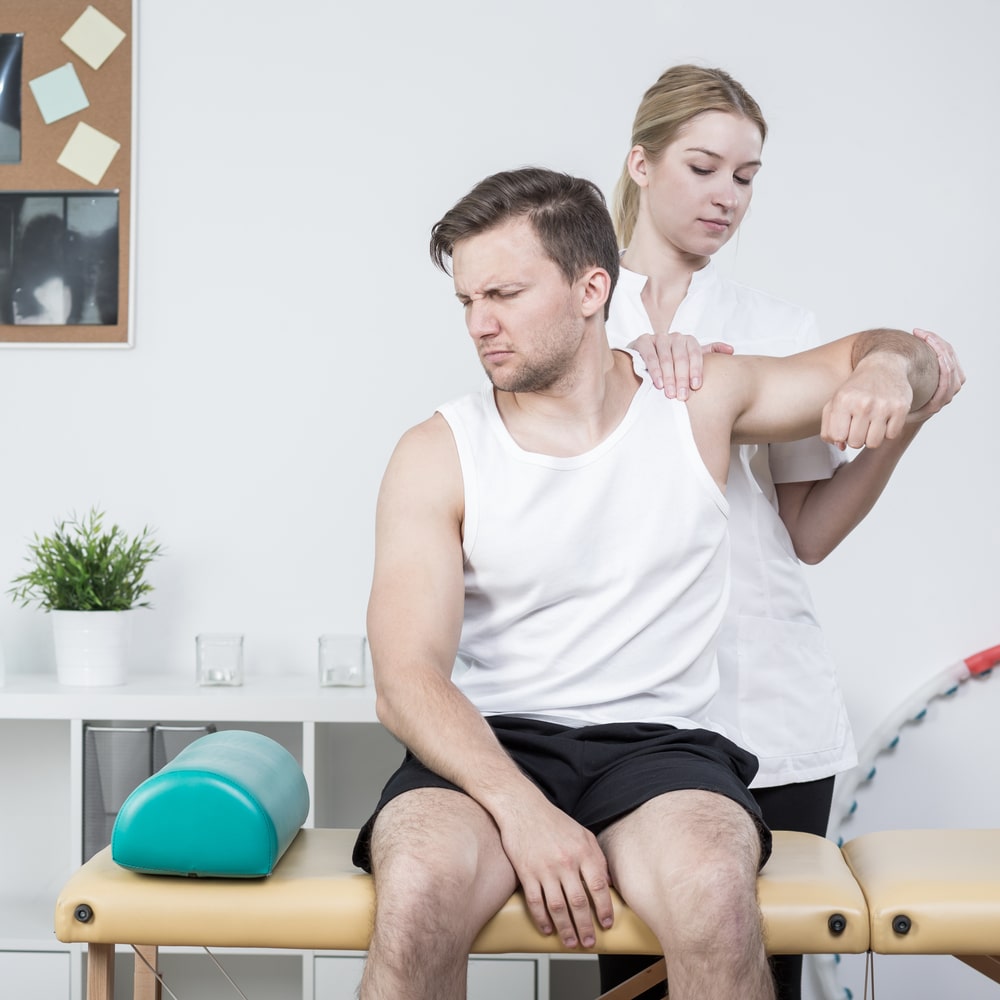
A physical therapist can provide an exercise program tailored to your needs in combination with treatments such as deep tissue massage, ultrasound and more. Physical therapy can often drastically reduce the pain associated with shoulder bone spurs. Decreasing the health of the surrounding tissues with stretching and strengthening, can decrease inflammation and therefore pain associated with bone spurs.
Medication
The most common medications associated with the treatment of shoulder bone spurs are over-the-counter anti-inflammatory drugs and pain relievers.
Rest and Lifestyle Modifications
Rest can sometimes work wonders for bone spur pain. Avoiding triggering movements and overuse in your daily life can promote effective healing—even the reabsorption of bone spurs by the body.
Minimally Invasive Procedures
If your body isn’t responding to the simple, non-surgical treatment options listed above, it may be time to consider a minimally invasive procedure.
Corticosteroid Injections
Therapeutic steroid injections can sometimes reduce pain and increase your range of motion.
Arthroscopic Surgery
Arthroscopic surgery for bone spurs in the shoulder joint involves trimming or removing bone spurs to open up space and relieve pressure on bones, ligaments, and tissues.
Surgical Treatments
Open Surgery
Open surgery is typically the last resort and is only considered in severe cases where bone spurs are seriously impacting your quality of life. Surgeries such as subacromial decompression (which can involve removing spurs and thickened ligaments as well as resurfacing shoulder bones) and shoulder arthroplasty (which is a replacement of the shoulder joint) often have excellent outcomes but are major procedures that involve a significant investment of time and require extensive rehabilitation.
Conclusion
To conclude, shoulder bone spurs are a common cause of shoulder pain and discomfort that can range from mild to severe. They typically occur as the result of an underlying cause or condition and require thoughtful and knowledgeable treatment. Consulting with a specialist in sports medicine can provide targeted treatment options tailored to your lifestyle and activity level.
If you’re experiencing shoulder pain and wondering if it could be due to shoulder bone spurs, schedule an appointment with one of the award-winning orthopedic surgeons at Modern Orthopaedics of New Jersey. Our team looks forward to treating you!