
Cubital tunnel syndrome symptoms, like forearm pain, hand weakness, and numbness in the ring and pinky fingers, can make it challenging to perform daily routines and engage in physical activities involving the arms and hands.
The good news?
A targeted exercise routine can often help alleviate cubital tunnel symptoms and improve fine motor function in individuals of all ages.
In this post, we’ve provided an overview of some of the key exercises we commonly recommend to our cubital tunnel syndrome patients. To learn more and explore treatment options tailored to your specific needs and mobility goals, schedule an appointment with one of our specialists!
What Is Cubital Tunnel Syndrome?
Cubital tunnel syndrome is a condition characterized by the compression or irritation of the ulnar nerve where it passes through the cubital tunnel – a narrow space behind the funny bone (medial epicondyle). It can affect anyone, but may be more likely to develop in individuals who:
- Have pre-existing conditions such as arthritis or ulnar nerve subluxation (an ulnar nerve that pops or rolls over the elbow joint)
- Have experienced an elbow injury
- Have an occupation or hobby that requires repetitive elbow motion (musician, construction worker, weightlifter)
- Frequently bend and/or lean on their elbows
Cubital Tunnel Syndrome Symptoms
The symptoms of cubital tunnel syndrome typically include some or all of the following:
- Numbness and/or tingling in the ring and little fingers
- Sharp or radiating pain down the forearm
- Weak or reduced strength when gripping
- Difficulty with fine finger movements
Warm-Up, Starting Position, And Safety Tips
Preparing yourself properly before beginning a new exercise program for cubital tunnel syndrome is essential. In this section, we’ve looked at some simple ways to foreground safety right from the get-go:
- Warming up is vital before any kind of exercise – and cubital tunnel syndrome exercises are no exception. Take a few minutes to gently roll the shoulders, bend and straighten the elbows, and circle the wrists before getting started.
- As you prepare to perform cubital tunnel syndrome exercises, ensure you’re always starting from a neutral posture with a long spine and the head centered over the torso (chin not jutting forward or back). Keep the shoulders relaxed and avoid fully stretched or flexed arm positions to reduce nerve irritation.
- Always consult your doctor or orthopedic specialist before starting a new exercise routine.
- Start slowly and gradually build up to more repetitions.
- Never push through pain or nerve symptoms like tingling or numbness. Stop immediately if a particular motion seems aggravating.
Best Cubital Tunnel Syndrome Exercises (Step-By-Step)
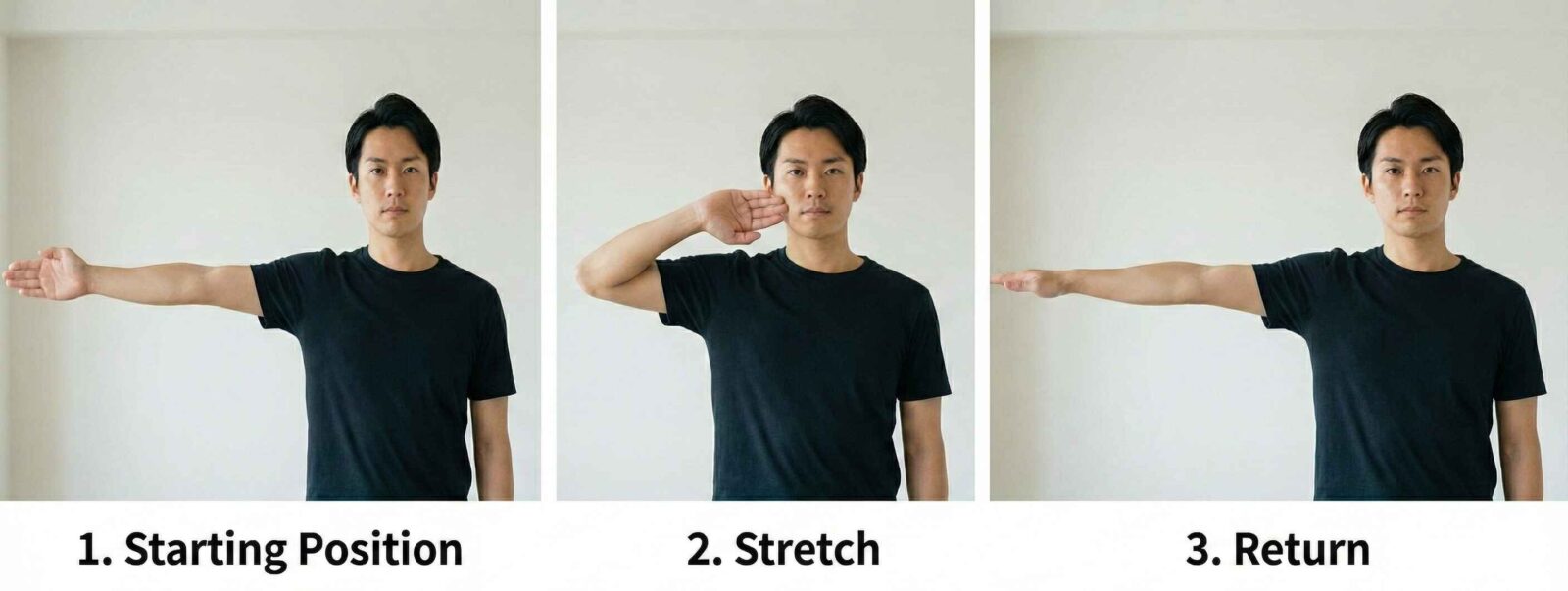
Ulnar Nerve Glide
- Stand with your arm stretched out to the side, palm facing the floor.
- Slowly bend your elbow and wrist up toward the side of your face until you feel a gentle stretch.
- Hold the stretch for 2 to 3 seconds and slowly return to the starting position.
- Do 5 to 10 repetitions, 1 to 2 times per day.
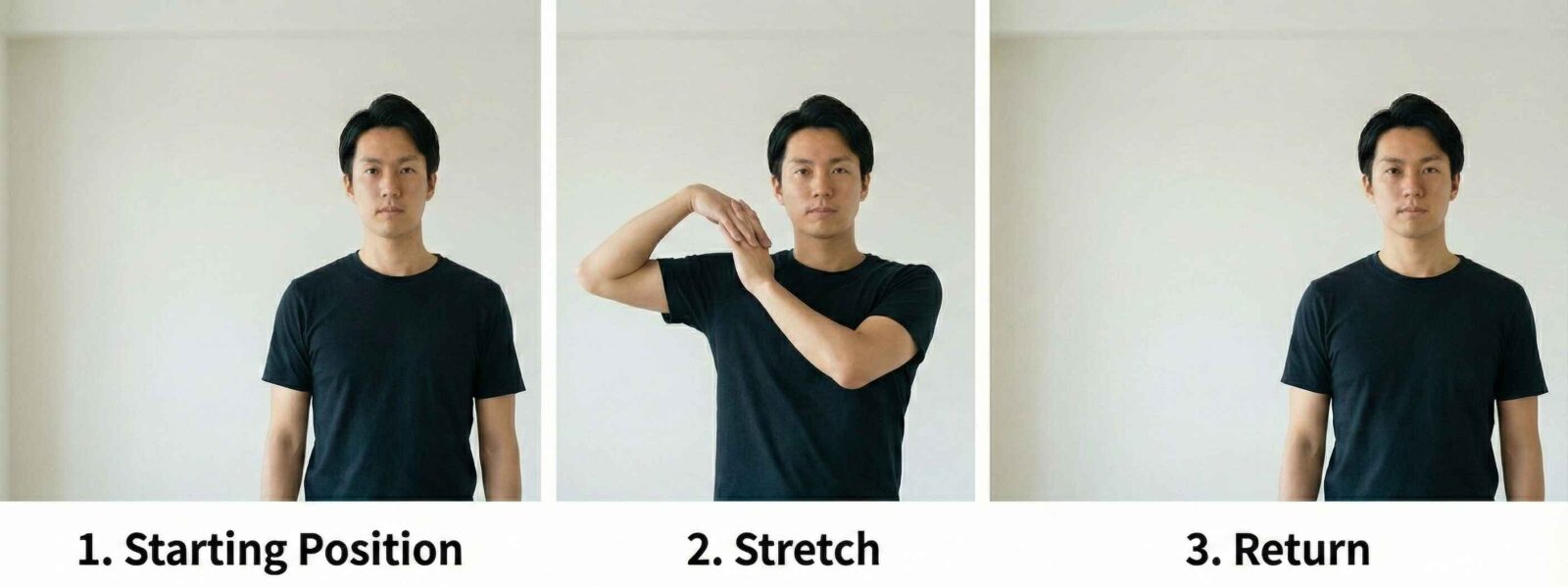
Elbow Flexion And Wrist Extension Stretch
- Begin with your arm at your side, elbow slightly bent.
- Bend the elbow fully so your hand moves toward your shoulder.
- Extend the wrist and fingers so the palm faces slightly up.
- Hold the stretch for 10 to 20 seconds.
- Slowly release and return to the starting position.
- Do 2 to 3 repetitions, 1 to 2 times per day.
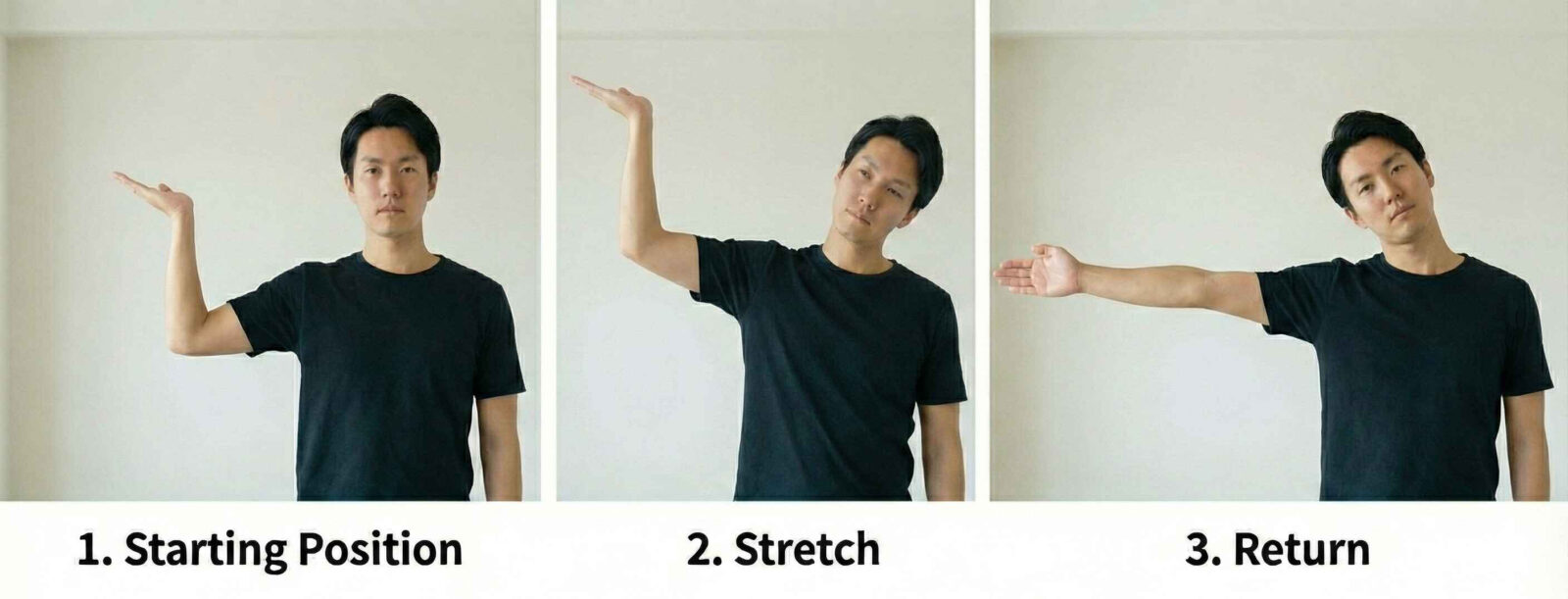
Nerve Flossing With Head Tilt
- Raise your arm to shoulder height with the elbow bent at 90 degrees.
- Extend the wrist, palm facing up, and tilt your head away to gently intensify the stretch through your forearm.
- Slowly straighten your elbow while maintaining the wrist extension and head tilt.
- Slowly return to the starting position.
- Do 5 to 10 repetitions, 1 to 2 times per day.
Forearm Rotation Control: Pronation/Supination Drill
- Begin with your arm at your side. Bend the elbow to 90 degrees, palm facing inward and upper arm tucked close to your side.
- Slowly rotate the forearm so the palm is facing up. Hold for 1 to 2 seconds.
- Slowly rotate the forearm so the palm is facing down. Hold for 1 to 2 seconds.
- Do 10 to 15 repetitions, 1 to 2 times per day.
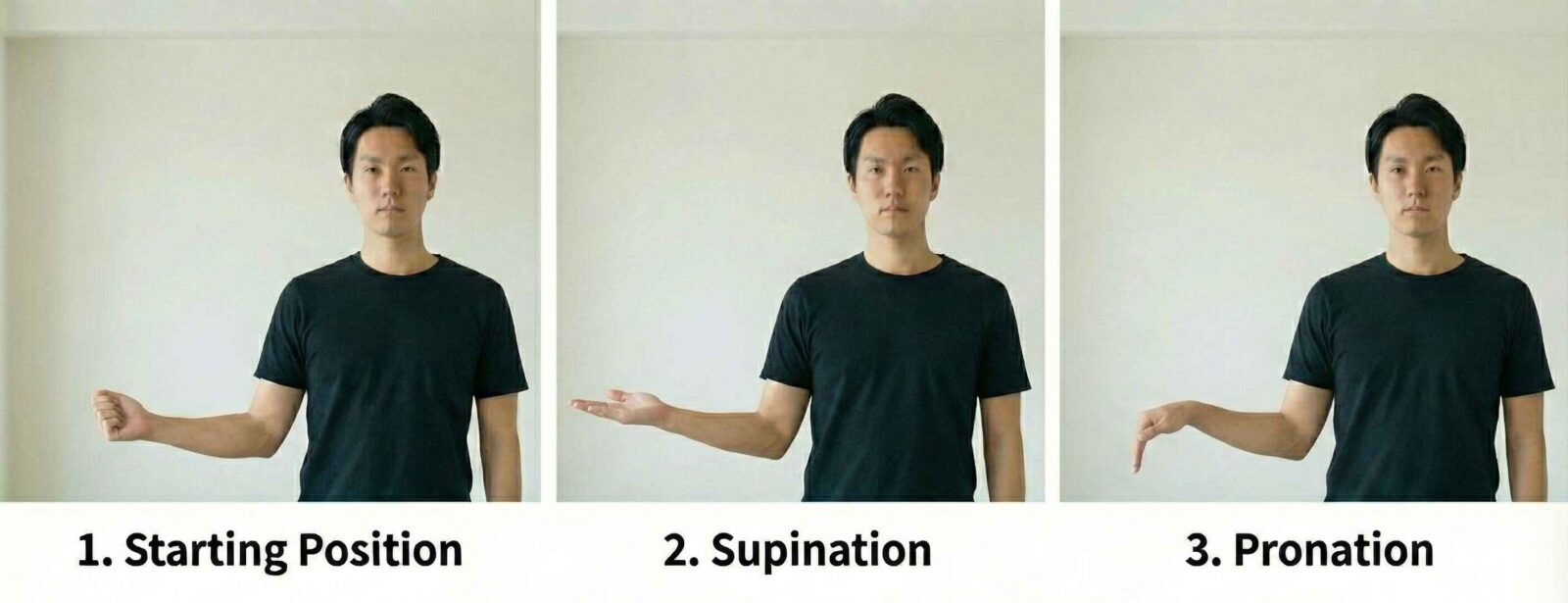
Table Or Wall Slider
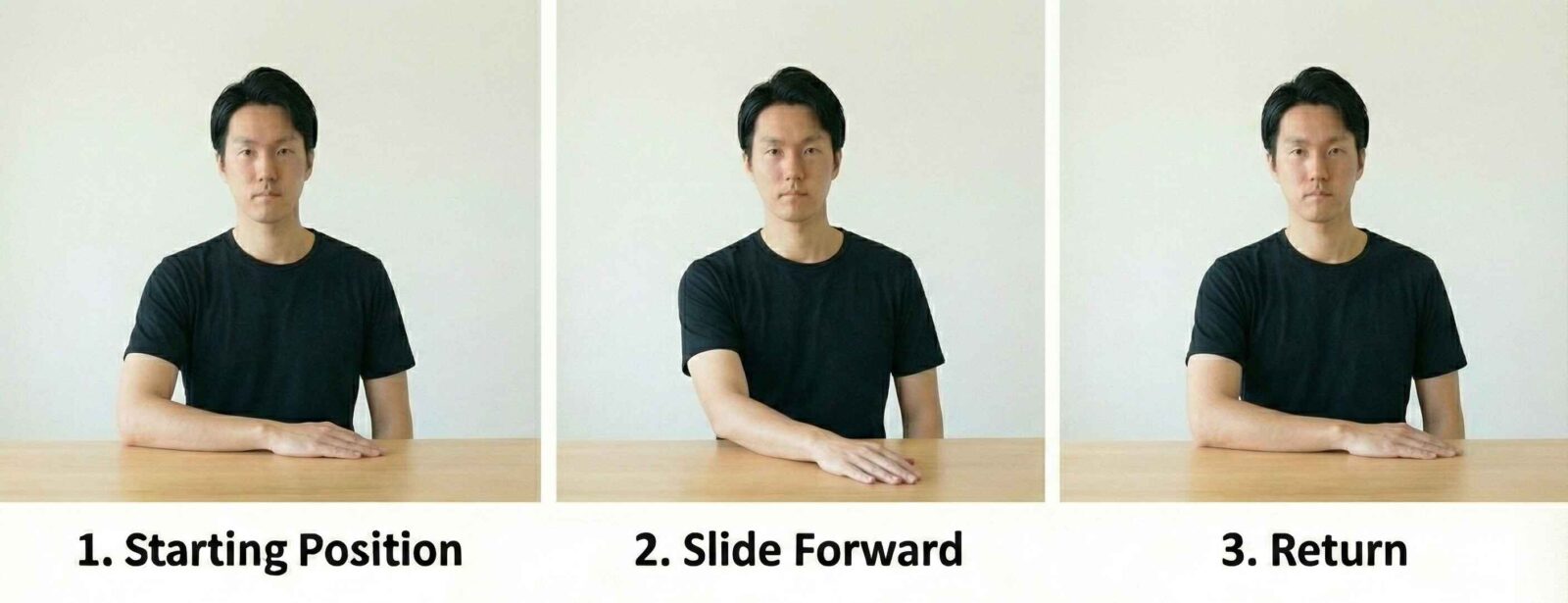
Table Slider
- Sit at a table with your forearm on the tabletop, palm down.
- Slowly slide the hand forward, straightening the elbow as you go.
- Slowly return to the starting position.
- Do 10 to 15 repetitions, 1 to 2 times per day.
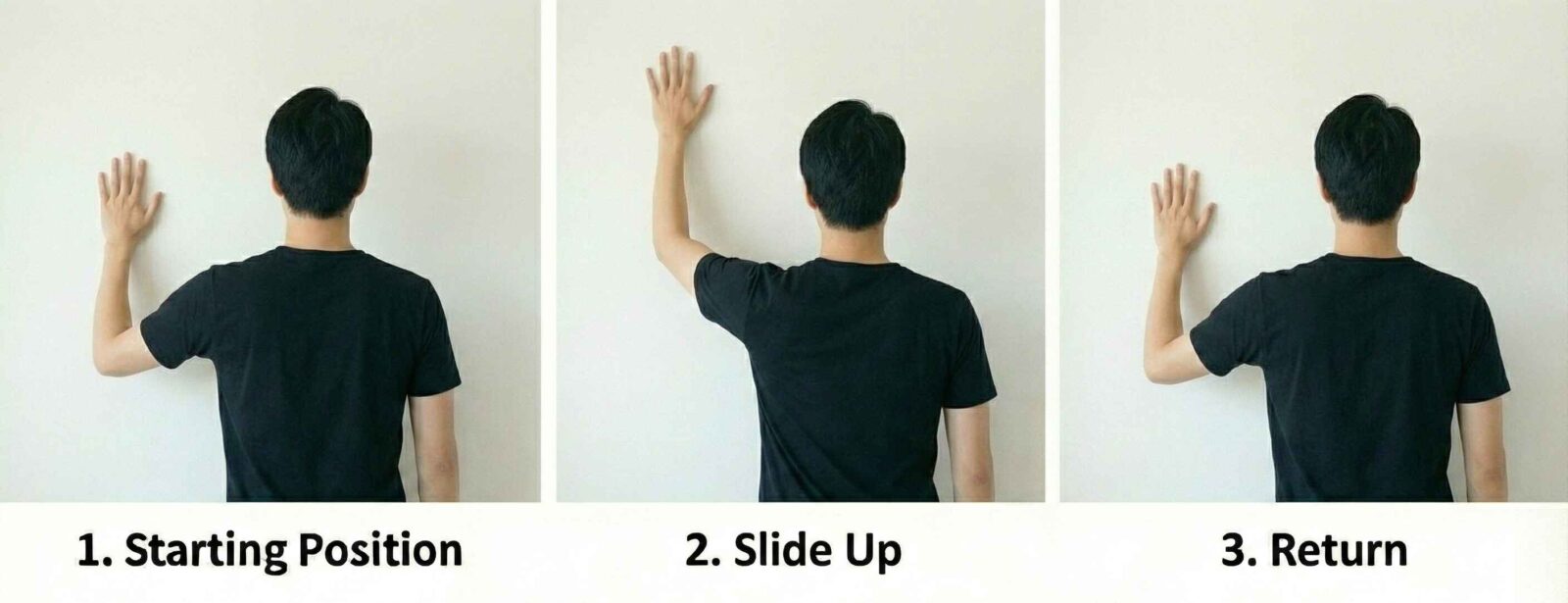
Wall Slider
- Place your palm on a wall at shoulder height.
- Slowly slide the hand up the wall, straightening the elbow as you go.
- Slowly return to the starting position.
- Do 10 to 15 repetitions, 1 to 2 times per day.
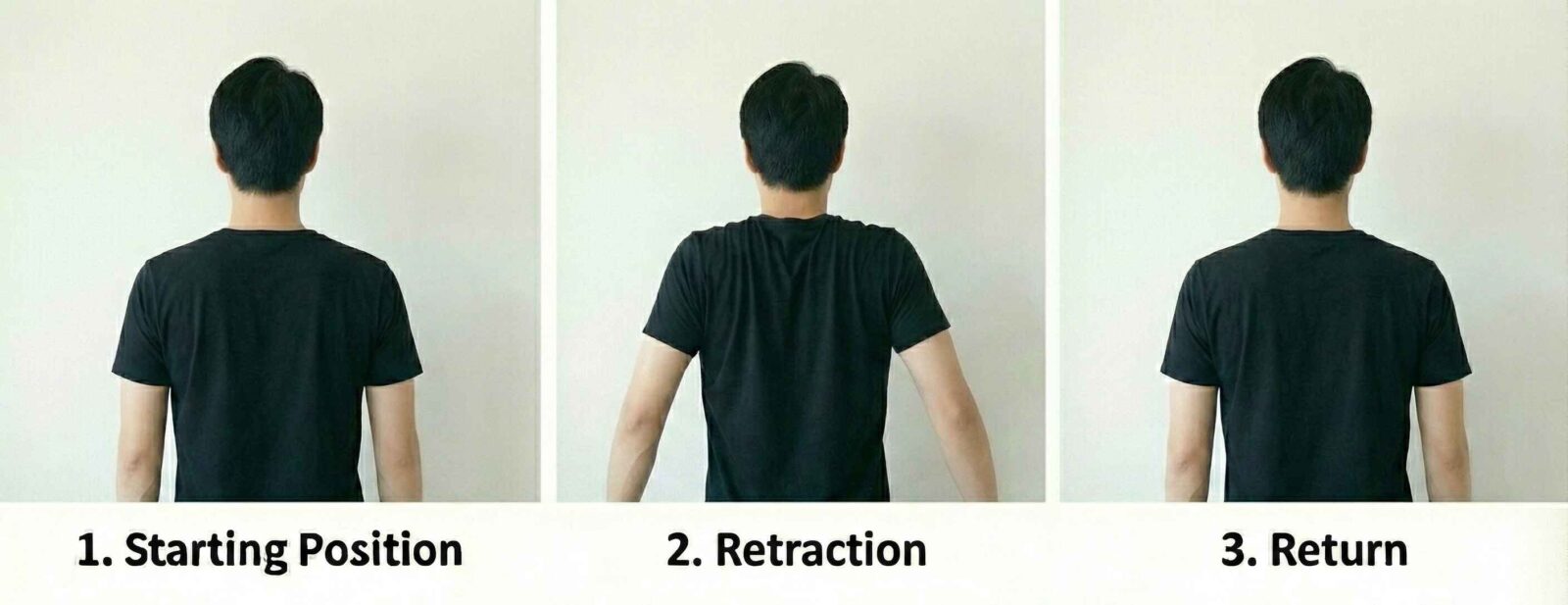
Posture Reset: Scapular Retraction
- Sit or stand with good posture – spine long, shoulders back, chest open.
- Draw the shoulder blades back and down, as if trying to pinch them together.
- Hold for 3 to 5 seconds.
- Slowly return to the starting position.
- Do 10 to 15 repetitions, 1 to 2 times per day.
When Exercises Aren’t Enough
Many cases of cubital tunnel syndrome improve with targeted exercise, but if symptoms are severe, persistent, or worsen even with regular exercise, surgical intervention may be considered. Surgical procedures that may be performed for cubital tunnel syndrome include ulnar nerve decompression, ulnar nerve transposition, and medial epicondylectomy. Speak with your orthopedic surgeon for more information.
Cubital Tunnel Syndrome FAQs
How often should I do cubital tunnel syndrome exercises?
How often you should do cubital tunnel syndrome exercises depends on the type of exercise, your personal tolerance, and the severity of your symptoms. Consult with your doctor or orthopedic specialist for further guidance based on the specifics of your situation.
How long until I feel relief from numbness and tingling?
The timeline for relief from numbness and tingling with cubital tunnel syndrome exercises can vary widely depending on the severity of your symptoms, how consistent you are with your exercises, and whether or not you have other underlying conditions. For milder cases, symptoms may begin to improve within 2 to 4 weeks of regular exercise, while more severe cases may take significantly longer. Speak with your doctor or orthopedic specialist for a more accurate estimate based on the specifics of your case.
Should I wear a brace at night if I sleep with my elbow bent?
Wearing a nighttime brace is often recommended for cubital tunnel syndrome, especially if you sleep with your arm bent. However, it’s important to consult with your doctor or orthopedic specialist if you’re considering using this type of device.
Cubital Tunnel Symptoms? Get An Expert Evaluation
Seeking expert care for cubital tunnel syndrome in New Jersey? At Modern Orthopaedics of New Jersey, our leading specialists have the training, skill, and experience to put you on the fastest road to a complete and lasting recovery. Contact us today to schedule an initial consultation and become an active partner in your journey to pain-free living!