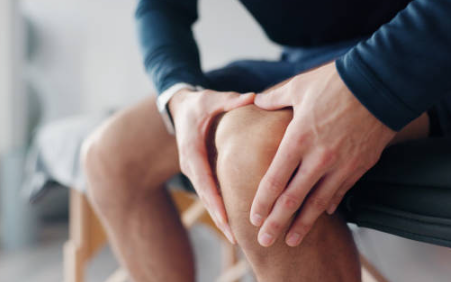
Living with knee pain, considering knee replacement surgery, and wondering if there are other less invasive treatment options that might be as – or almost as – effective? If so, you’re not alone. At Modern Orthopaedics of New Jersey, one of the most common questions we receive is: What are the alternatives for knee replacement?
It’s estimated that close to 800,000 Americans undergo knee replacement surgery each year. New advancements in surgical techniques and technology make the procedure safer, quicker, and more effective than ever before.
Even so, joint replacement surgery remains a major life decision, and, for many patients, other treatment options may also offer effective short-term or long-term relief for knee pain and discomfort. The right treatment plan for you depends on the specifics of your case, and at Modern Orthopaedics of New Jersey, our leading joint specialists are committed to exploring your options with you in detail – starting with the least invasive approach possible.
In this post, we’ve provided an overview of some common non-surgical and surgical alternatives to total knee replacement surgery. To learn more about which treatment option(s) may be recommended based on your specific situation, schedule an initial consultation with our world-class team at Modern Orthopaedics of New Jersey today!
Key Takeaways
- Total knee replacement surgery is safer, quicker, and more effective than ever before, but it’s not the only treatment option available for knee pain.
- Non-surgical treatment options can include weight management, low-impact exercise, medications, and knee braces.
- Alternative surgical treatment options can include knee arthroscopy, knee osteotomy, and partial knee replacement surgery.
- The right treatment option for your knee pain depends on your mobility goals and the specifics of your case. Schedule a consultation with our leading team at Modern Orthopaedics of New Jersey to learn more!
What Is Total Knee Replacement Surgery?
Total knee replacement is a surgical procedure that involves replacing a damaged knee joint with a prosthetic joint that has been designed to replicate its shape and function. Damaged cartilage and bone are removed and a prosthesis made from plastic and metal is precisely placed to provide the same support, flexibility, and range of motion as a healthy knee joint. Two recent systematic research reviews have shown that total knee replacement surgery is associated with a wide range of clinically meaningful improvements in knee pain, function, and quality of life for patients younger than 65 years old as well as patients over 65 years old.
At Modern Orthopaedics of New Jersey, our fellowship-trained joint specialists use advanced Mako technology to pre-plan knee replacement surgeries with patient-specific 3-D modeling. Depending on the specifics of the case, traditional or robot-assisted surgery may be advised to achieve the best possible outcomes.
Non-Surgical Alternatives
Hoping to resolve knee pain without surgical intervention? In many cases, one or more of the treatment options below may represent the solution you’ve been seeking:
Weight Management
Your knees support your body weight every time you stand. Carrying excess weight places extra pressure on the knee joints and puts them under constant strain. Healthy weight loss can significantly improve knee pain by reducing the load the knee joint has to support. In fact, a 2005 study revealed that for every pound of weight lost, there’s a four-fold reduction in the load exerted on the knee per step during daily activity!
If you are overweight or obese, losing just 10% of your body weight can have a dramatic impact on the health of your knee joints and overall mobility. Consult with your doctor to discuss how best to make healthy lifestyle changes based on your specific situation and weight loss goals.
Low-Impact Exercise
When you’re dealing with persistent knee pain, exercise may feel like the last thing you want to try – but in many cases, nothing could be further from the truth. Movement actually has the potential to improve knee pain and function by building muscle strength, reducing stiffness and inflammation, and improving flexibility in the knee joint. But not all types of physical movement are equally beneficial for knee pain.
When dealing with knee problems, high-impact forms of exercise (those that involve running, jumping, or direct contact) can actually further damage the knee joint and exacerbate pain and other symptoms. Instead, it’s best to focus on low-impact exercises that focus on strengthening the legs, hips, and core, such as:
- Walking
- Swimming
- Cycling
- Strength training
- Yoga
Before beginning any exercise program, it’s essential to consult with your doctor to ensure that your body will benefit from the type and intensity of physical training you plan to engage in. Remember that consistency is key, and it may take time (often several weeks or more) to begin to notice improvement in knee symptoms.
Medications
Over-the-counter medications, such as nonsteroidal anti-inflammatory drugs (NSAIDs) like ibuprofen and aspirin, are often helpful in reducing knee pain and inflammation on an as-needed or short-term basis. However, potential gastrointestinal and cardiovascular side effects make these drugs less suitable for long-term pain management. Depending on the circumstances, your doctor may suggest prescription medications for longer-term knee pain relief, as well as to reduce inflammation and improve mobility in the knee joint.
Knee injections are another possible form of pain management for knee pain and inflammation. Corticosteroid injections deliver a combination of steroid medication and local anesthetic to the knee joint and can temporarily relieve knee pain for up to a few months at a time. Regenerative injections, such as platelet-rich plasma (PRP) injections or stem cell therapy, involve the use of organic substances derived from the patient’s own body to naturally promote tissue regeneration.
Knee Braces
In certain instances, bracing the knee can limit painful motion as well as redistribute forces to align the joint and reduce symptoms. While soft braces (compression neoprene sleeves) help to keep the knee joint warm and reduce inflammation, hinge braces provide significantly more stability to the knee joint. Knee braces are rarely a standalone treatment option for knee pain and are often recommended in combination with physical therapy and/or other approaches.
Could a knee brace be an appropriate treatment option based on your specific knee condition and symptoms? Book an appointment today with one of our board-certified joint specialists to learn more!
Surgical Alternatives To Total Knee Replacement
At Modern Orthopaedics of New Jersey, our skilled orthopedic surgeons are highly experienced in performing a wide range of surgical procedures to relieve knee pain. Some common alternatives to total knee replacement include:
Knee Arthroscopy
Knee arthroscopy is a minimally invasive surgery used to diagnose and treat problems inside the knee joint. A tiny camera and specialized instruments are inserted through small incisions in order to view, remove, and/or repair damaged tissues and structures.
Knee Osteotomy
A knee osteotomy is a surgical procedure that preserves the natural knee joint by redistributing weight to relieve pressure on damaged areas. The surgery involves reshaping one or both bones that form the knee joint and is often recommended for younger, active patients to reduce pain and improve function.
Partial Knee Replacement
Partial knee replacement surgery may be recommended in cases where arthritis or damage is limited to one compartment of the knee joint (medial, lateral, or patellofemoral). During this type of procedure, the damaged area is resurfaced with implants to restore smooth movement, while healthy bone, cartilage, and tissues are preserved to maintain as much of the knee’s natural structure as possible.
Conditions Treated Through Knee Surgery
The most common condition treated through knee replacement surgery is osteoarthritis – a condition characterized by the gradual deterioration of cartilage in the knee joint. Other conditions that can cause severe knee pain/dysfunction and may be treated with knee replacement surgery include:
- Other forms of arthritis (rheumatoid arthritis, post-traumatic arthritis, patellofemoral arthritis, etc.)
- Severe knee injuries or traumas (fractures, extensive ligament tears, joint damage)
- Osteonecrosis (blood flow to the femur is disrupted, leading to significant dysfunction in the knee joint)
- Severe deformities of the knee joint that impact mobility, comfort, and the ability to perform daily activities
When Total Knee Replacement Surgery Is Required
Your orthopedic surgeon is the only person who can determine whether total knee replacement surgery is the best treatment option for you moving forward – based on your symptoms, mobility goals, overall health, and a variety of other factors. Common indications that it might be may include:
- Severe, persistent pain that limits daily activities and doesn’t improve with rest or conservative treatments
- Severe stiffness and/or reduced range of motion
- Limited mobility
- Decreased quality of life
Book An Appointment Today
At Modern Orthopaedics of New Jersey, our orthopedic surgeons in Wayne, NJ, Parsippany, NJ, and Paramus, NJ, have advanced training in non-surgical and surgical treatments of the knee joint and are dedicated to achieving exceptional outcomes for every patient. Experience the Modern difference and take the first step towards pain-free living when you schedule an initial consultation at one of our state-of-the-art clinics today!