If you dread getting out of bed in the morning, knowing that your first steps of the day will be accompanied by stabbing pain in your heel, plantar fasciitis—inflammation of the connective tissue on the bottom of the foot—could be the underlying reason.
Estimated to impact approximately 1 in 10 people at some point in their lives, plantar fasciitis is a leading cause of heel pain. Treatment and management options have traditionally included rest, physical therapy, medication, and—in the most severe or persistent cases—surgery. In recent years, however, shockwave therapy has also emerged as a breakthrough treatment approach for plantar fasciitis.
Could shockwave therapy provide the heel pain relief you’re seeking? Schedule an initial consultation with our world-class team today to learn more about treating chronic plantar fasciitis!
What Is Plantar Fasciitis?
Plantar fasciitis is a common condition characterized by the inflammation and thickening of the plantar fascia—the strong, fibrous band of tissue that runs along the bottom of the foot, connecting the heel to the toes and helping to form and support the arch. The condition often develops as a result of overuse or repetitive strain on the plantar fascia (such as from walking, running, or sports), but is also common in people who stand throughout the day at work, are overweight, or have flat feet or high arches.
Plantar fasciitis can usually be diagnosed through a physical examination. Diagnostic imaging tests may also be ordered to rule out other conditions with similar symptoms.
Common Symptoms
While every patient’s experience of plantar fasciitis is unique, common symptoms of the condition include:
- Heel pain that feels sharp, achy, or throbbing (often worst in the morning or when bearing weight after a period of rest)
- Arch pain
- Stiffness and/or swelling around the heel bone
- A tight Achilles tendon
What Is Shockwave Therapy?
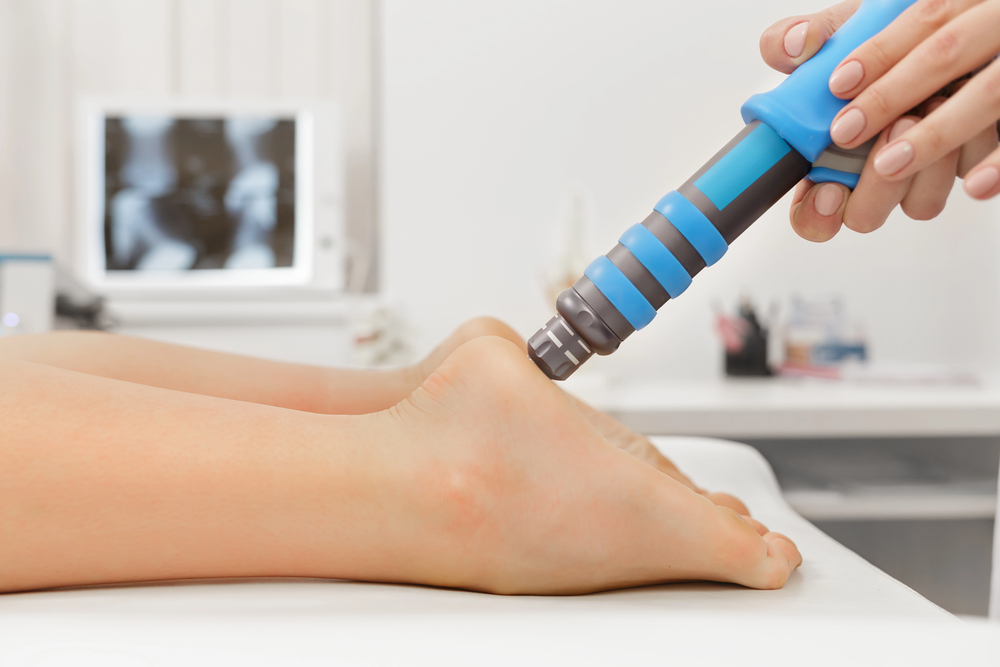
Shockwave therapy is a non-invasive treatment that precisely targets inflamed tissues with penetrating sound waves in order to reduce pain and promote healing. A handheld probe is used to administer high-intensity acoustic energy to the treatment area, causing micro-traumas which trigger the body’s natural healing processes.
Shockwave therapy’s effectiveness is backed by an extensive body of clinical research and more than two decades of orthopedic use. It is considered to be a safe and effective treatment approach for a wide variety of musculoskeletal disorders and injuries, and in many cases, can help patients avoid more invasive treatments, such as surgical procedures.
How Shockwave Therapy Helps With Heel Pain
Shockwave therapy has become an increasingly popular plantar fasciitis treatment in recent years, with research linking it to improved heel pain, function, and quality of life in patients living with the condition. A 2021 study found that four sessions of shockwave therapy reduced the thickness of the plantar fascia in patients with calcaneal bone spurs, and a 2022 study found extracorporeal shockwave therapy (ESWT) to be an effective form of therapy for plantar fasciitis experienced by amateur runners.
Shockwave therapy directly contributes to the healing of damaged tissue in the plantar fascia by:
- Reducing pain
- Improving blood circulation
- Accelerating tissue regeneration
- Increasing collagen synthesis
- Breaking down scar tissue and calcifications
Schedule an appointment at Modern Orthopaedics of New Jersey today to learn more!
Benefits Of Shockwave Therapy
Shockwave therapy has rapidly gained popularity as a treatment option for plantar fasciitis due to its many benefits:
- Non-Invasive – Shockwave treatment doesn’t involve any medications, injections, or surgical procedures. It’s generally painless and requires little to no downtime.
- Quick Heel Pain Relief – Many patients notice an almost instant reduction in heel pain following shockwave therapy treatment.
- Regenerates Damaged Tissue – Shockwave therapy stimulates the body’s own healing processes, resulting in the natural repair and regeneration of damaged tissues.
- Safe and Effective – Patients who undergo shockwave therapy treatment can often avoid the risks associated with more invasive treatments for plantar fasciitis.
What To Expect During Treatment
At Modern Orthopaedics of New Jersey, shockwave treatment is administered by highly trained specialists under the watchful eyes of our board-certified orthopedic surgeons.
The Process And Duration
- Shockwave therapy treatments are performed in our state-of-the-art office environment.
- You’ll be comfortably positioned, and gel will be applied to the bottom of one or both heels/feet to allow for better transmission of the sound waves.
- An experienced specialist will use a handheld probe to gently touch the skin, administering high-energy sound waves into the targeted treatment area.
- You may notice slight pressure, but the treatment should not be painful. Let your doctor know right away if you experience any discomfort during shockwave treatment.
- Each treatment session typically lasts about 5 to 6 minutes with little to no downtime required afterwards.
- Usually, between 3 and 6 shockwave treatment sessions are recommended for plantar fasciitis treatment and are scheduled about one week apart.
Alternative Treatments For Plantar Fasciitis
At Modern Orthopaedics of New Jersey, our award-winning doctors tailor treatment to the needs and goals of each patient. Depending on the specifics of your case, shockwave therapy may be recommended in combination with other treatment options for plantar fasciitis, including the following:
- Lifestyle Changes – These could include rest, activity modification, weight management, and more.
- Physical Therapy – Working with a physical therapist to improve strength and flexibility in your feet and calf muscles is often a critical element of plantar fasciitis treatment.
- Medications – Oral medications and/or injections may be recommended to relieve pain and reduce inflammation associated with plantar fasciitis.
Other Options To Consider
Often, a multi-pronged approach is most effective in improving pain and loss of function caused by plantar fasciitis. Other treatment options to consider may include:
- Icing
- Arch supports or other orthotics
- Splints or other immobilization techniques
If pain from plantar fasciitis is severe, persistent, and/or unresponsive to conservative or minimally invasive treatment approaches, surgery may be considered to release the plantar fascia ligament in order to reduce tension and relieve inflammation in the heel.
Is Shockwave Therapy Right For You?
Shockwave therapy has many advantages: It’s precise, non-invasive, and can be a highly effective treatment for many soft tissue conditions and injuries, including chronic plantar fasciitis. But is it the right therapy for you?
At Modern Orthopaedics of New Jersey, we’ll perform an in-depth diagnostic process and take the time to get to know you and understand your treatment goals before determining the answer to this question. In many cases, shockwave therapy is highly beneficial for patients with plantar fasciitis, but a personalized assessment is the only way to determine if it’s the best choice for you.
Conclusion
Ready to learn more about shockwave treatment for plantar fasciitis? Contact our award-winning team of orthopedic specialists today to schedule an appointment and explore our non-invasive shockwave therapy treatments for long-lasting relief. We look forward to working with you!