Key Points
Spondylolisthesis exercises can improve strength and flexibility, but they cannot reverse vertebral slippage. Ask your doctor or physical therapist for recommendations on which exercises to do. Modify or stop activities that worsen symptoms; don’t push through pain.
How Exercise Helps Manage Spondylolisthesis
Spondylolisthesis occurs when one spinal bone slips out of alignment with the bone below it, usually in the lower back. Strengthening and stretching the muscles supporting your spine may help reduce pain and make everyday movement more comfortable.
Check With Your Doctor Before Starting
The type of spondylolisthesis, your symptoms, and your stage of recovery affect exercise choices. Your doctor or physical therapist can select appropriate movements, demonstrate them, and help you increase activity gradually.
Safe Exercises For Spondylolisthesis
The exercises below should be discussed with your care team; they are examples of commonly prescribed exercises for spondylolisthesis, but they may not be right for everyone; the safest exercises are those prescribed by your team:
Pelvic Tilts
Lie on your back with knees bent and feet flat. Gently tighten your abdominal muscles and tilt your pelvis so your lower back moves toward the floor. Relax without forcing the movement.
Single Knee-To-Chest Stretch
Lie on your back with both knees bent. Hold behind one thigh and gently bring that knee toward your chest, leaving the other foot down. Release, then switch legs.
Glute Bridges
Lie on your back with knees bent and feet flat. Tighten your abdominal and buttock muscles. Press through your feet and lift your hips without arching your lower back. Lower slowly.
Dead Bug
Lie on your back with arms pointing upward and hips and knees bent to 90 degrees. Gently tighten your abdominal muscles. Slowly lower one arm and extend the opposite leg toward the floor, without arching your back. Return to the starting position and switch sides.
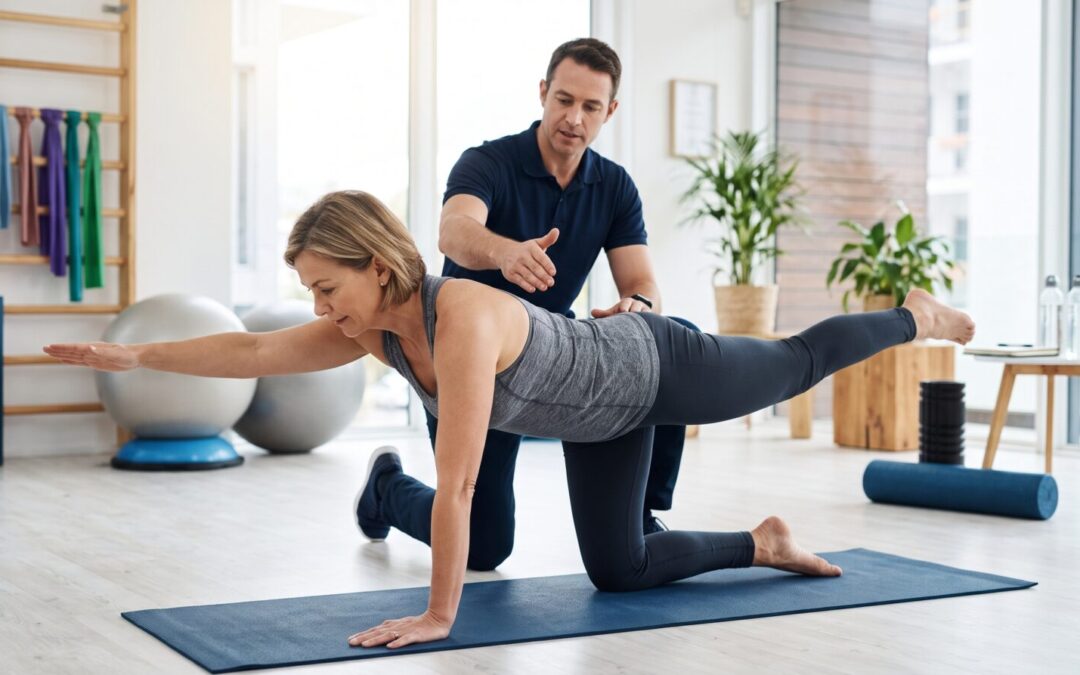
Bird Dog
Start on your hands and knees, with hands below shoulders and knees below hips. Reach one arm forward and the opposite leg backward without arching your back or tipping your hips. Return to the starting position and switch sides.
Lying Hamstring Stretch
Lie on your back and support one raised thigh with your hands. Keep the other foot on the floor. Gently straighten the raised knee until you feel a comfortable stretch behind your thigh. Release and switch legs
Low-Impact Activities That Are Generally Well Tolerated
Walking and stationary cycling may be easier to tolerate than higher-impact exercise. Start with short sessions and increase gradually, guided by your symptoms and your physical therapist’s advice.
Exercises And Activities To Avoid
These activities may need to be paused or modified – not necessarily avoided permanently. Follow your doctor’s guidance:
Back Extension Exercises (Cobra, Superman, Back Bends)
Deep backbends and repeated lower-back arching can aggravate symptoms. Avoid forcing these positions, especially during a flare-up.
Heavy Lifting & Spinal Loading
Heavy squats, deadlifts, and overhead presses may worsen symptoms. Ask about lighter loads or alternatives before resuming heavy lifting.
High-Impact & Contact Sports
You may need to pause running, jumping, and contact sports while symptoms settle. Resume them gradually with your clinician’s guidance.
Twisting Under Load
Avoid forceful weighted twisting, such as heavy Russian twists, unless cleared by your care team.
Signs You Should Stop And Call Your Doctor
Stop exercising and contact your clinician promptly for worsening pain, new tingling, numbness, or weakness.
Seek emergency care immediately for new trouble urinating, loss of bladder or bowel control, numbness around your genitals or anus, or severe or worsening weakness or numbness in both legs. Do not wait for a routine appointment.
When Non-Surgical Care Isn’t Enough
If pain continues to affect daily life, your doctor may adjust physical therapy or discuss medications and injections. Surgery may be considered when non-surgical care hasn’t helped enough or nerve problems worsen. Contact our team at Modern Orthopaedics of New Jersey; we offer both non-surgical and surgical care for spondylolisthesis and other spine problems.
Frequently Asked Questions
Is walking good for spondylolisthesis?
Often, yes; be mindful, however, as in some cases walking can worsen symptoms. Start with short walks and adjust the distance as needed.
Can exercise reverse spondylolisthesis?
No. Exercise may improve symptoms and function, but it doesn’t move the vertebra back into place.
Is yoga safe if you have spondylolisthesis?
Some poses may be appropriate with modifications. Avoid deep backbends and forceful twisting unless your clinician clears them.
Can you run with spondylolisthesis?
Possibly, after assessment and rehabilitation. Readiness depends on symptoms, strength, and movement control; talk to your care team if you are thinking about jogging or running.
Are anterolisthesis exercises the same as spondylolisthesis exercises?
Anterolisthesis means forward vertebral slippage, a form of spondylolisthesis. Other forms include retrolisthesis (backward slippage) and laterolisthesis (sideways slippage). Exercises for these different forms can overlap; your routine should follow your care team’s recommendations.
How often should you do spondylolisthesis exercises?
Follow the schedule your care team recommends, including repetitions, rest days, and when to increase the difficulty.